





Validating a Startup Idea Before You Write Any Code
When you have an idea for a product, the instinct is to start building. Building feels like progress, and it is the enjoyable part.
6 min read



Silicon Labs works with schools, colleges, organisations and individual learners across Nepal — and runs the research and incubation programmes where what people learn turns into something built.
Our Partners & Facilitating Institutions
 Reliance International AcademySaraswatinagar, Chabahil, Kathmandu, Nepal
 Reliance Co-Ed School
 Reliance Public School
 Nepal Vidhya Sadan
One organisation, three capabilities — teaching, research and building — that feed into each other.
Bring coding, robotics and digital skills into the timetable, with training and support for the teachers who deliver them.
Close the gap between a syllabus and what employers actually ask for, through practical, project-led programmes.
Train teams on the tools and practices your work depends on, shaped around what your people already know.
Learn a technical skill properly, whether you are starting out or moving into technology from another field.
Where early ideas get tested, shaped and built — with mentorship from people who have taken products to market.
Applied research in education and technology, run with institutions and early-career researchers.
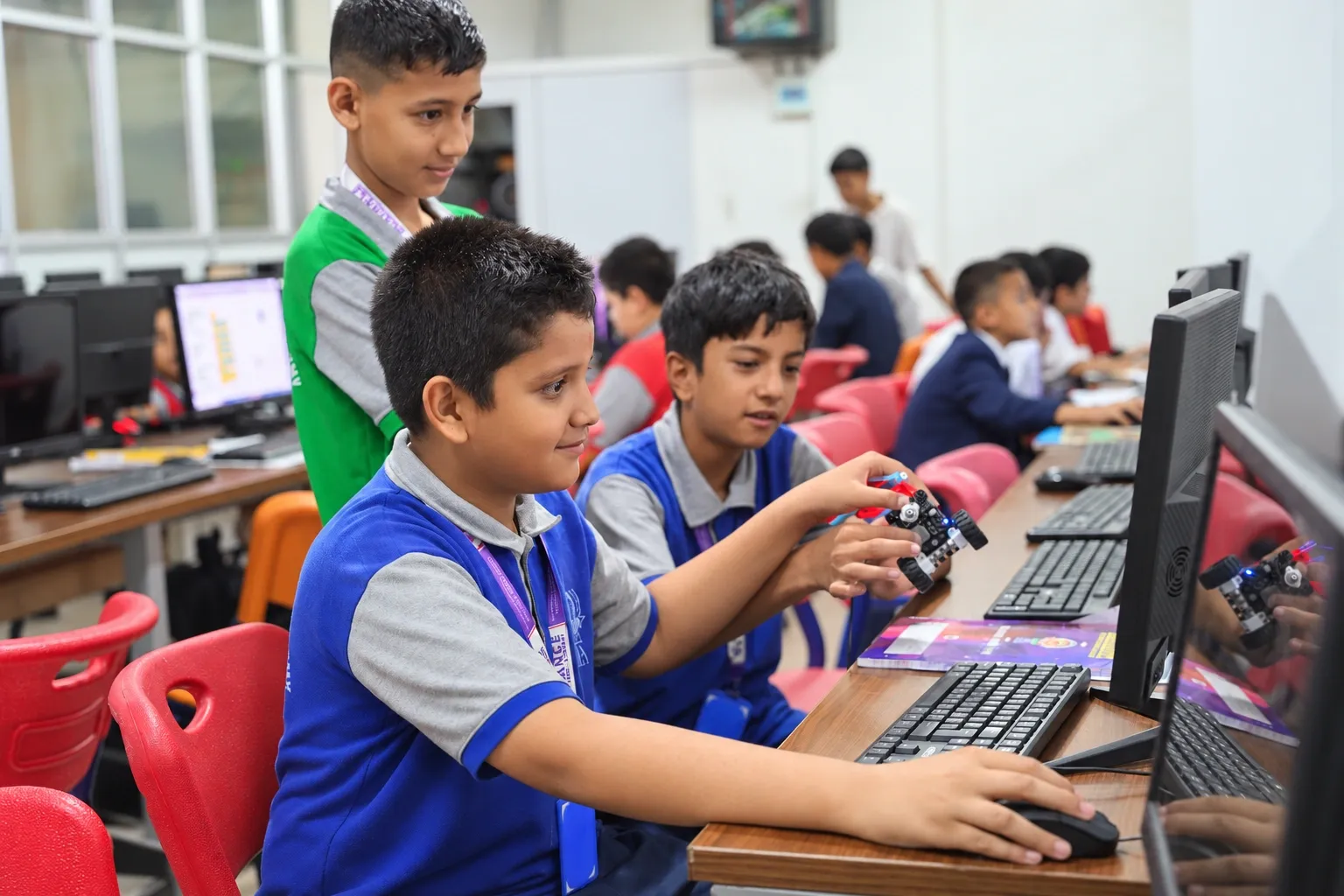
Hands-On Engineering & Research
Practical learning with real microcontrollers, robotic kits, and AI systems.
From curiosity to creation. From ideas to impact. Silicon Labs brings together practical technology education, applied research, and startup incubation under one ecosystem — giving learners, educators, researchers, and innovators a place to turn ideas into something real. Whether it begins with a classroom experiment, a research question, or a bold idea, we create the environment to take it further.
Most providers teach, or research, or incubate. We do all three, which means a classroom idea has somewhere to go.
Our trainers and mentors work in technology, not only in teaching, so what you learn reflects how the work is actually done.
Programmes are shaped to your curriculum, your timetable and your people — not delivered off a shelf.
Learners who want to go further can move into research projects or the incubation hub rather than stopping at a certificate.
Learn. Build. Research. Incubate.
A technology journey that grows with the learner — from discovering technology in school to building professional capability, conducting research, and turning promising ideas into real-world ventures.
School & Early Learning
Introduce learners to Coding, Robotics, AI, Electronics, and emerging technologies through hands-on learning.
→ Build curiosity. Discover possibilities.
College & Professional Development
Develop industry-relevant technical and professional skills that bridge academic learning with real-world opportunities.
→ Build capability. Become market-ready.
Applied Research & Innovation
Move beyond learning to investigate, experiment, prototype, and solve real-world problems through applied research.
→ Turn questions into knowledge.
Ideas, Ventures & Market
Support promising ideas through prototyping, mentorship, validation, and incubation — helping transform concepts into products, ventures, and market-ready solutions.
→ Turn ideas into reality.
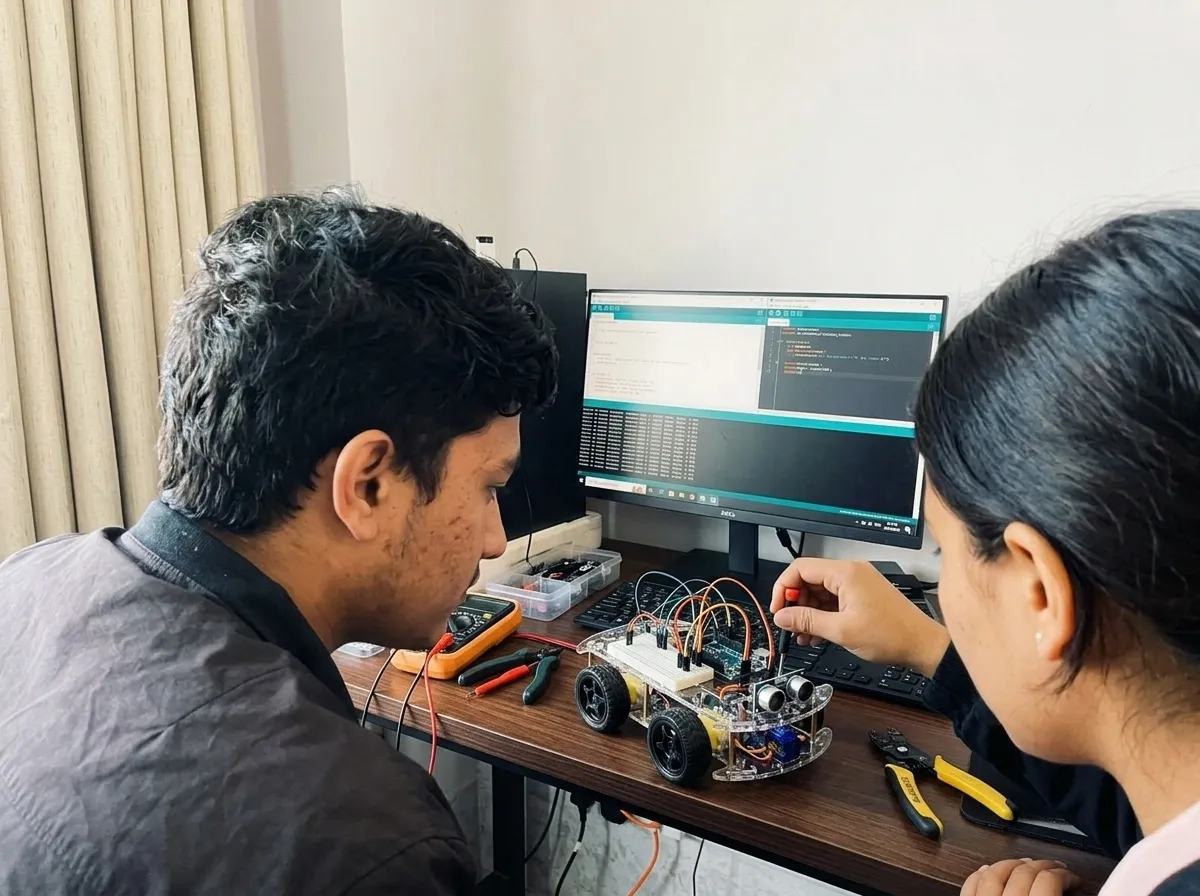
From Prototype to Market Launch
Validating hardware, autonomous systems, and scalable software with dedicated mentors.
SL Insights
Fresh perspectives on learning, technology and innovation.
When you have an idea for a product, the instinct is to start building. Building feels like progress, and it is the enjoyable part.

A literature review is one of the first substantial pieces of writing in a research project, and one of the hardest to get right. The difficulty is rarely finding sources.

Ask for advice on your first programming language and you will hear two names more than any others: Python and JavaScript. Both are widely used, well documented and friendly enough for beginners.

Changing careers into technology is possible from almost any starting point, but it is rarely quick and it is never effortless.

Generative AI assistants can draft emails, summarise documents, write code and analyse text in seconds. Staff may already be experimenting with them, whether or not the organisation has said anything.