
Hardware & IoT
Embedded Systems and IoT with Arduino
Make physical things that sense, decide and report. Rolling intake; dates set once a group forms.
Overview
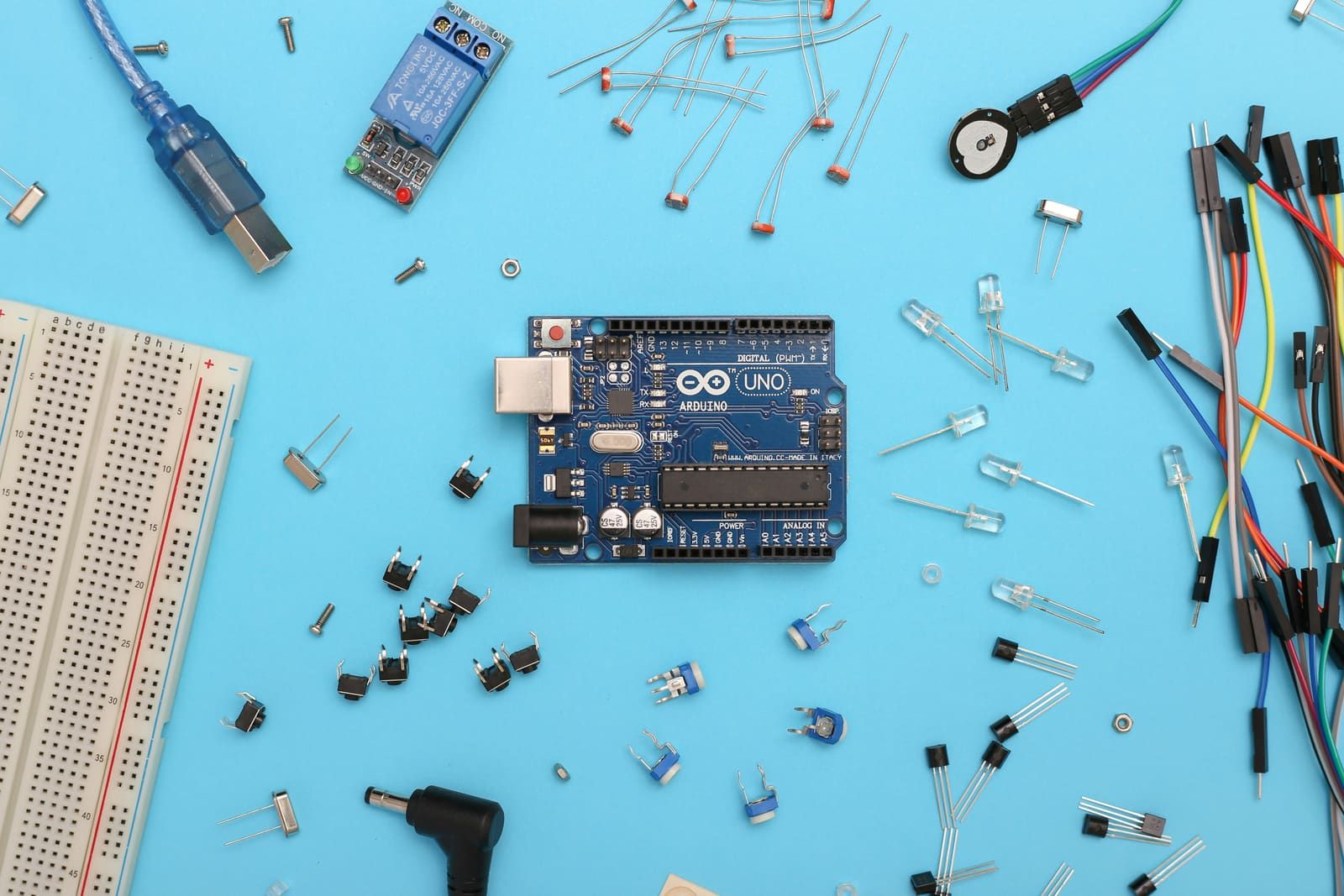
The hardware course, and the one where things catch fire if you wire them backwards. You work with real components from the first session: sensors, motors, displays and radios, driven by an Arduino and later connected to the internet.
This course runs on a rolling intake. Register now and you will be placed in the next cohort; dates are confirmed to everyone on the list once a group has formed. A component kit is included in the fee and is yours to keep.
Learning outcomes
Read a circuit diagram and build the circuit from it
Program a microcontroller in C++ for Arduino
Read from sensors and drive motors, displays and relays
Connect a device to WiFi and publish its readings
Debug hardware methodically, with and without a multimeter
Design an enclosure and power supply for something that must run unattended
Curriculum
01Week 1: Circuits
- Voltage, current and resistance, practically
- Breadboards and reading a schematic
- Your first blinking light
02Week 2-3: Programming the board
- The Arduino environment and C++ basics
- Digital and analogue input and output
- Timing without blocking
03Week 4: Sensing
- Temperature, humidity, light, distance and motion
- Calibration and noise
- Choosing a sensor for a job
04Week 5: Actuating
- Motors, servos and drivers
- Relays and switching mains safely
- Displays
05Week 6-7: Getting online
- WiFi modules
- Publishing readings to a server or MQTT broker
- A dashboard for your device
- Power: batteries, sleep and running for months
06Week 8: Build
- Design and build a device of your own
- Enclosure and mounting
- Demonstration
Prerequisites
- No electronics or programming experience required
- Willingness to work with your hands
- A laptop with a USB-A port or an adapter